
In Conversation with
JULIANNE AHN
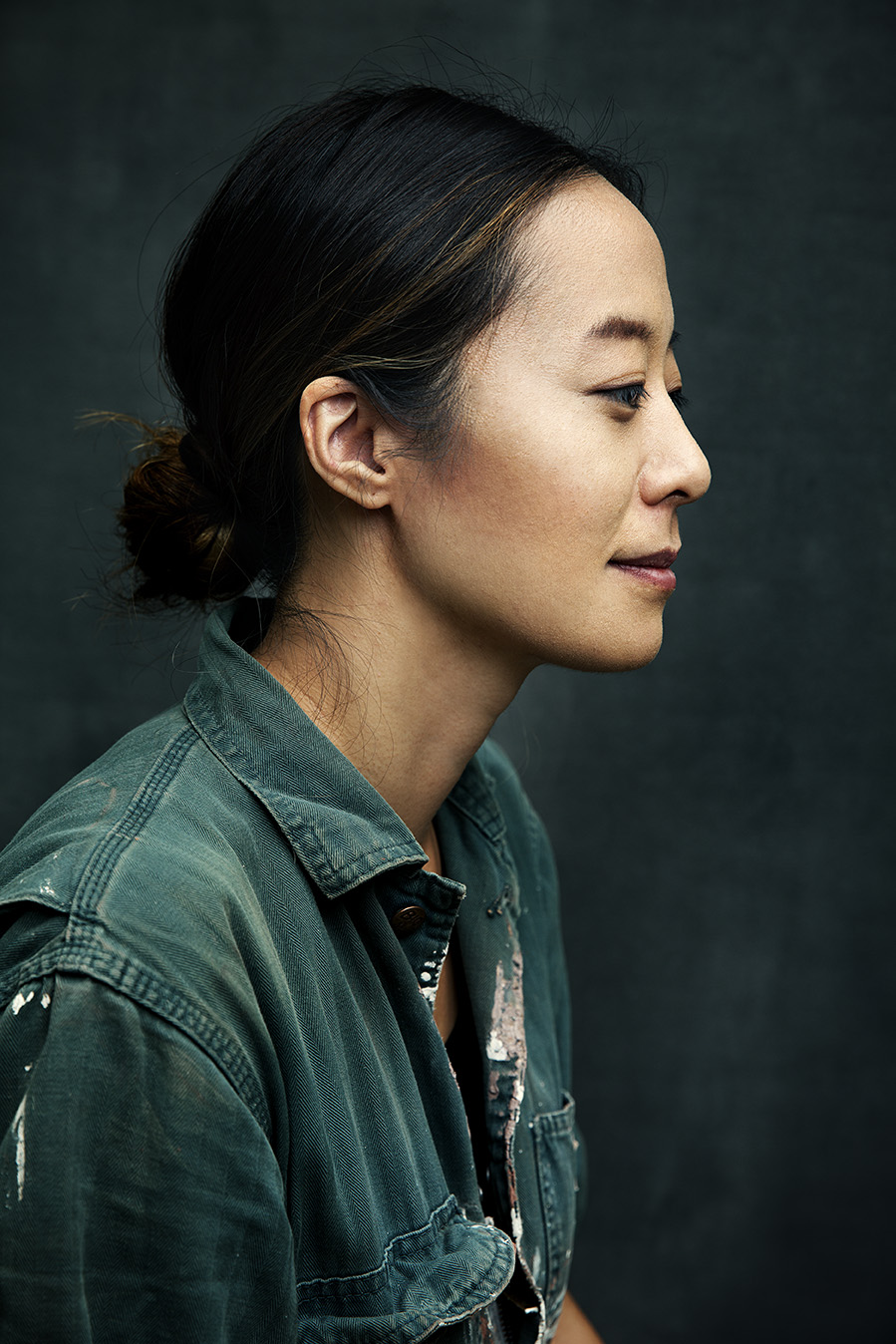
Words by Josephine Choe. Visuals by Julianne Ahn. Portrait by Jesse Dittmar.
Julianne Ahn is the creative force behind Object & Totem, a ceramics studio she founded in 2011. Her journey into ceramics is as unique as her creations, blending a background in textile design with a passion for hands-on artistry. I had the pleasure of speaking with Julianne about her path to ceramics, the evolution of Object & Totem, and her creative inspirations.
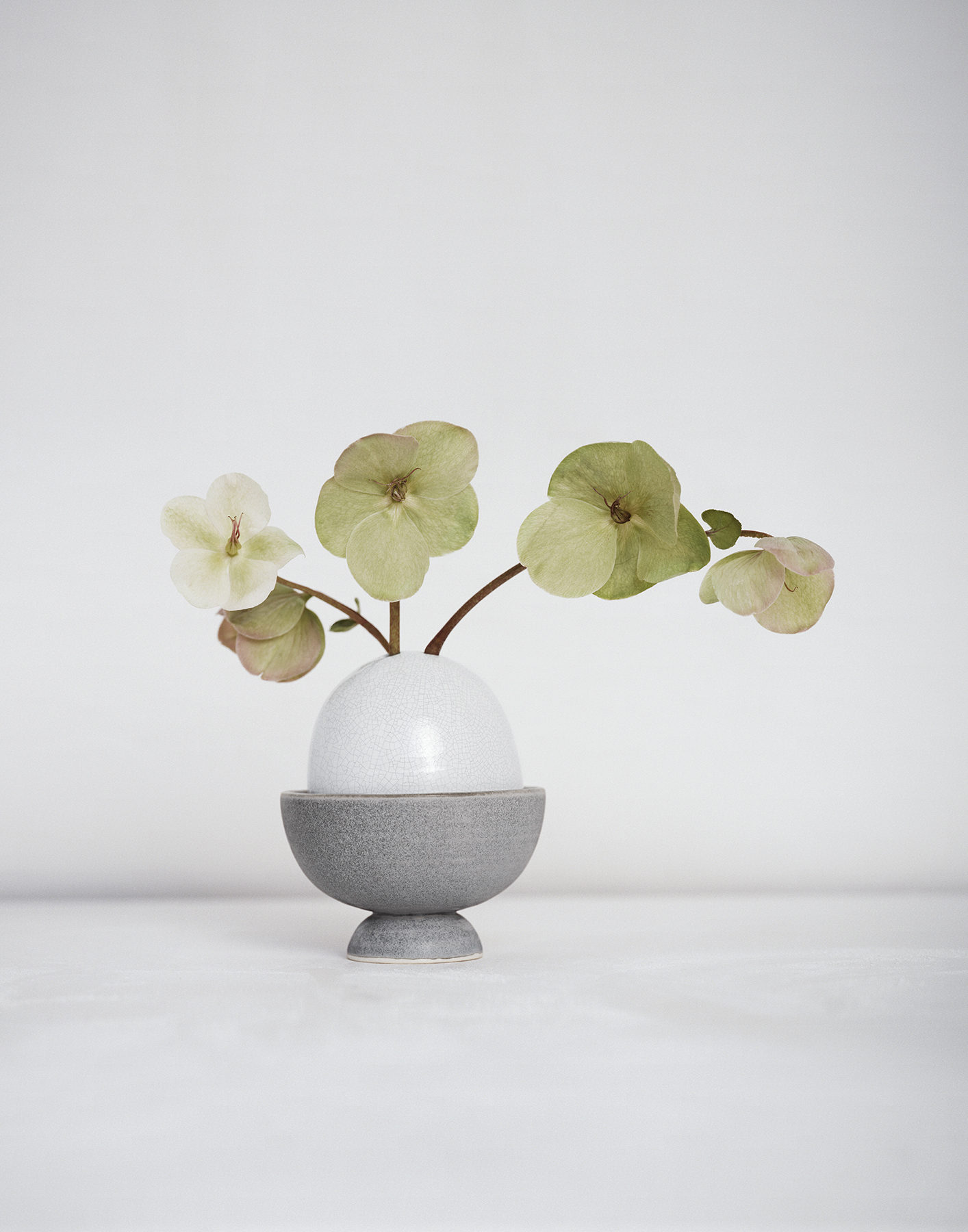
“You have to accept that not everything is precious. Sometimes you let things go.”

Choe: Your work with Object & Totem beautifully merges craft and design. How did you first discover your passion for ceramics?
Ahn: It’s an interesting story. I didn’t initially set out to become a ceramicist. My undergraduate studies were in textile design at the Rhode Island School of Design, and I pursued graduate studies in fiber material at the School of the Art Institute of Chicago. After graduating during the recession, I found myself in a job that was primarily computer-based and not very hands-on. When I was laid off, I suddenly had time on my hands. A friend had taken a ceramics class at the Clay Studio in Philadelphia, and it piqued my interest. I decided to enroll in a four-week throwing class, and it unexpectedly resonated with me.
Choe: It’s fascinating how a challenging period led you to a new passion. What was it about ceramics that captivated you?
Ahn: The process itself was mesmerizing. Initially, it was daunting—I remember almost giving up after the first class. But there was something about the rhythm and the tactile nature of working with clay that drew me in. I found myself thinking about it even as I was falling asleep, replaying the motions in my mind. Once I successfully created my first piece, I was hooked.
Choe: Your background in textiles seems to influence your ceramic designs. How do your experiences in textile design inform your work with ceramics?
Ahn: Absolutely. My training in textile design has made me acutely aware of patterns, textures, and surfaces. I’m often inspired by the momentary observations of my immediate environment. This sensitivity to surface and form translates into my ceramic pieces, where I strive to create objects that are both functional and aesthetically engaging.
Choe: Object & Totem has garnered attention for its unique pieces. How did you transition from learning ceramics to establishing your own studio?
Ahn: It was a gradual process. After those initial classes, I continued to experiment and learn, often documenting my progress on a blog and later on Instagram. Sharing my journey allowed me to connect with a broader community interested in design and craftsmanship. In 2011, I officially founded Object & Totem, drawing inspiration from traditional vase forms with an interpretation of a unified lightness.
Choe: Your pieces often blend traditional forms with contemporary aesthetics. Can you tell us more about your creative process?
Ahn: I enjoy synthesizing different influences to create something new. For instance, I might take a classic vase shape and reinterpret it with modern colors or textures. My process involves a lot of experimentation—playing with forms, glazes, and firing techniques to achieve the desired effect.
Choe: The name “Object & Totem” is intriguing. What inspired it?
Ahn: The name reflects the dual nature of my work. “Object” signifies the functional aspect of the pieces, while “Totem” speaks to the idea of objects holding personal or spiritual significance. I aim to create pieces that resonate on both a practical and emotional level.
Choe: Your journey is inspiring, especially considering your self-taught background in ceramics. What advice would you give to aspiring artists?
Ahn: Embrace the learning process and don’t be afraid to make mistakes. Sharing your work, even in its early stages, can be daunting, but it’s also a valuable part of growth. Stay curious, keep experimenting, and allow your unique perspective to shine through in your creations.


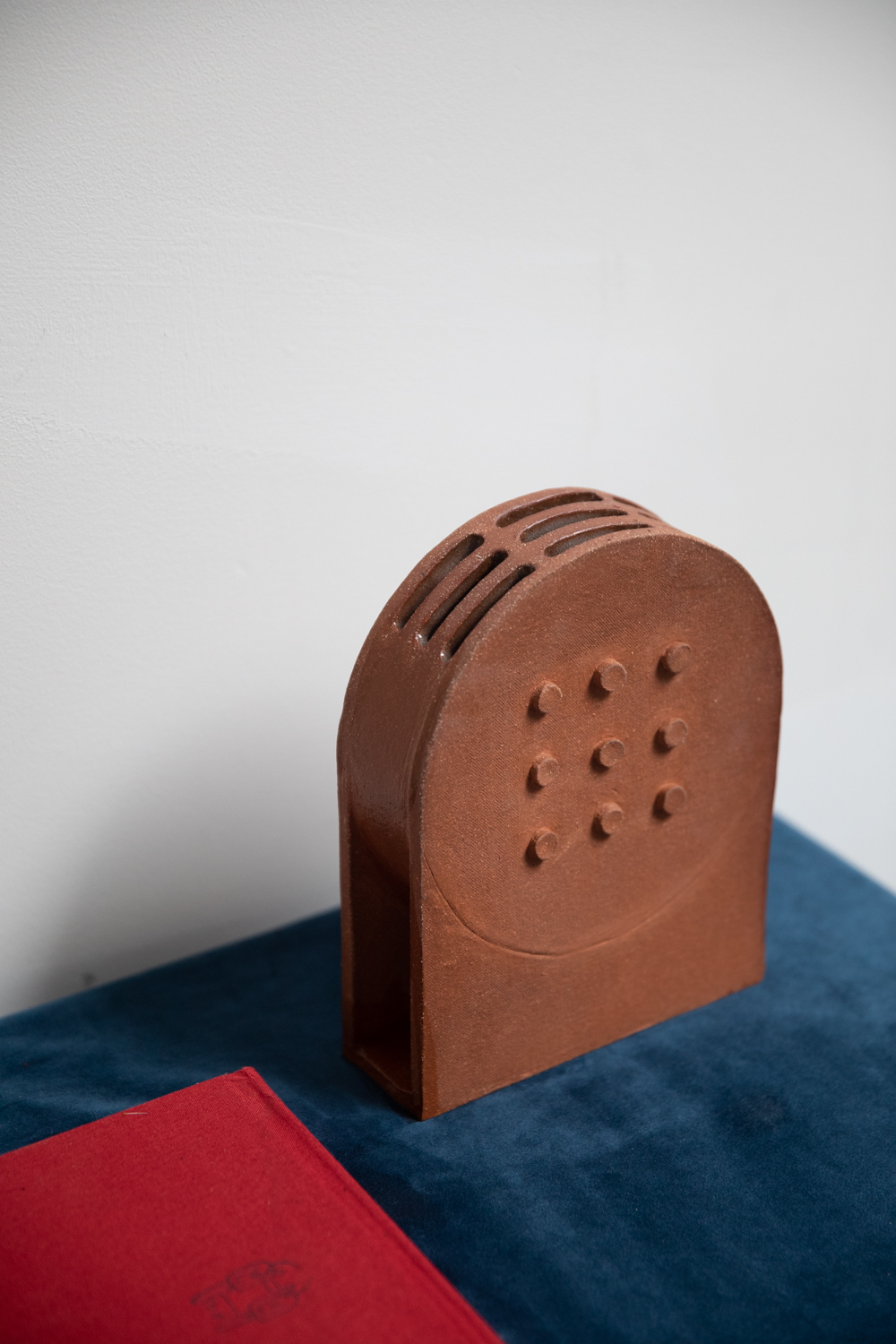
Sitting down with Ahn, it’s clear that the essence of her work isn’t confined to a single form or material. Her practice, ever-evolving, mirrors the shifts in her own life. “It’s funny because I feel like I have so many different facets of the type of work that I make,” she reflects. “At the beginning, it started off with jewelry and tableware, and then it evolved as I evolved as a person.”
There is a fluidity to Ahn’s approach, an openness to adaptation that allows her work to grow alongside her. Whether simplifying her forms or elaborating on them, her pieces remain grounded in a distinct sensibility. “I try to stay within this area of forms where all the curves complement one another,” she explains. “A lot of them are inspired by ceramics that were around my house growing up. Not a crazy amount, but just a silhouette of something familiar.”
Her connection to Korean ceramics runs deeper than mere aesthetics. Ahn’s upbringing was subtly infused with the presence of traditional pottery, and as she delved further into ceramics, she found herself returning to those childhood impressions. “There’s something about the weight of those pieces, the way they feel in your hands,” she muses. “It’s not just about the visual, but the tactile memory of them.” This embedded nostalgia informs her work, giving it a quiet resonance that extends beyond form.
This interplay between the familiar and the experimental is something she embraces fully, treating the surfaces of her work in unexpected ways. “We all recognize celadon as being associated with Korean ceramics, but I like to push beyond that,” she says. Even a shape as seemingly simple as a sphere becomes an exercise in patience and perception. “Every time I thought I made a perfect sphere, I’d look at it and go, ‘What was I thinking?’ There are so many steps to not just making a sphere, but making it feel like a sphere, having that emotional weight.”
It’s this curiosity, this inability to settle into repetition, that keeps Ahn invested in ceramics. “I see ceramicists who do the same forms all the time, and I think, wow, that’d be really cool if I could do that. But I love trying new things. I love that glaze chemistry is so beyond my brain but still something I can keep learning from. It feels endless.”
One of her more recent ventures, wood firing, has added another layer of unpredictability to her process. “It’s a true collaboration,” she says. “You don’t know where the flame will interact with your pieces or how the ashes will fall. It’s this kind of magic, like music happening. And then there’s the process: the stoking, the communal aspect of being with everyone… I’m starting to understand a little more.”
The communal nature of wood firing has given Ahn a newfound appreciation for process over outcome. Unlike conventional kiln firing, which offers a degree of predictability, wood firing introduces an element of chance. “You surrender control in a way that’s both terrifying and exhilarating,” she admits. “But there’s also this sense of camaraderie—everyone stoking the fire together, waiting to see what happens. It’s a collective effort, and that’s really special.”
Ahn’s work is intuitive. She leans into the material’s natural inclinations, following rather than forcing. “When I make ceramics for boutiques like The Primary Essentials, I try to even out the different types of clays so nothing stands out too much. There’s a harmony, not just in the shapes but in the balance of warm and cool tones, of whites and neutrals. It’s a dance.” She also works within the constraints of the medium itself. “I’m limited to the amount of clay in a bag, and I like to be efficient about what I make with it. It’s kind of maddening, but it also feels like a problem to solve. And when it all comes together in the end, it’s really satisfying.”
She speaks about ceramics like an ongoing conversation—between hands and earth, between control and accident. “You have to accept that not everything is precious. Sometimes you let things go. It’s not as extreme as glass artists smashing their work, but it’s not far from it either.” This pragmatic approach is what allows Ahn to keep moving forward, constantly shifting, adapting, and refining her practice.
The work resists easy categorization, blending tradition with intuition, precision with spontaneity. Objects emerge: imperfect, intentional, full of life. At its core, her practice is deeply personal, a reflection of the forms, memories, and textures that have shaped her world.
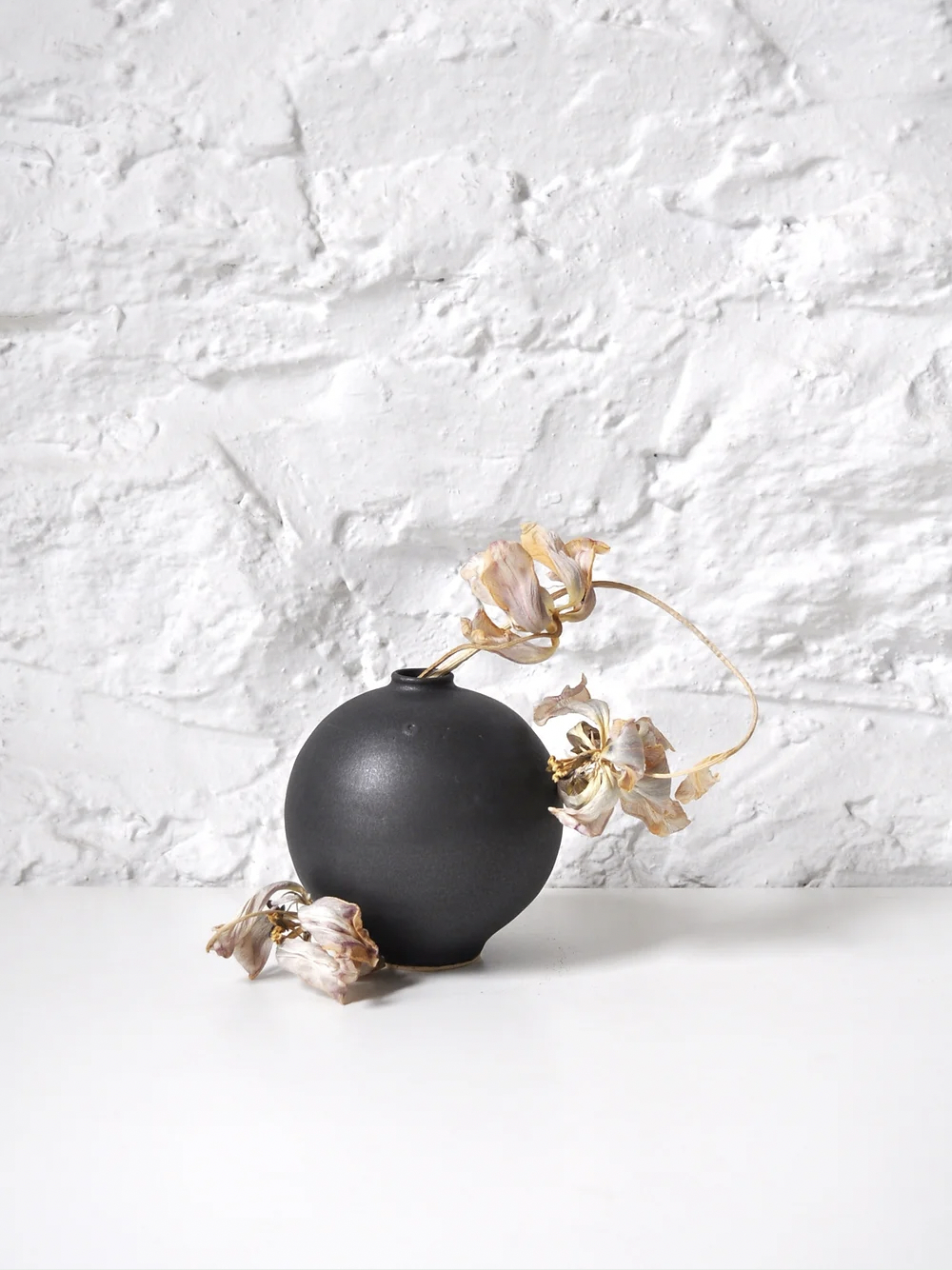
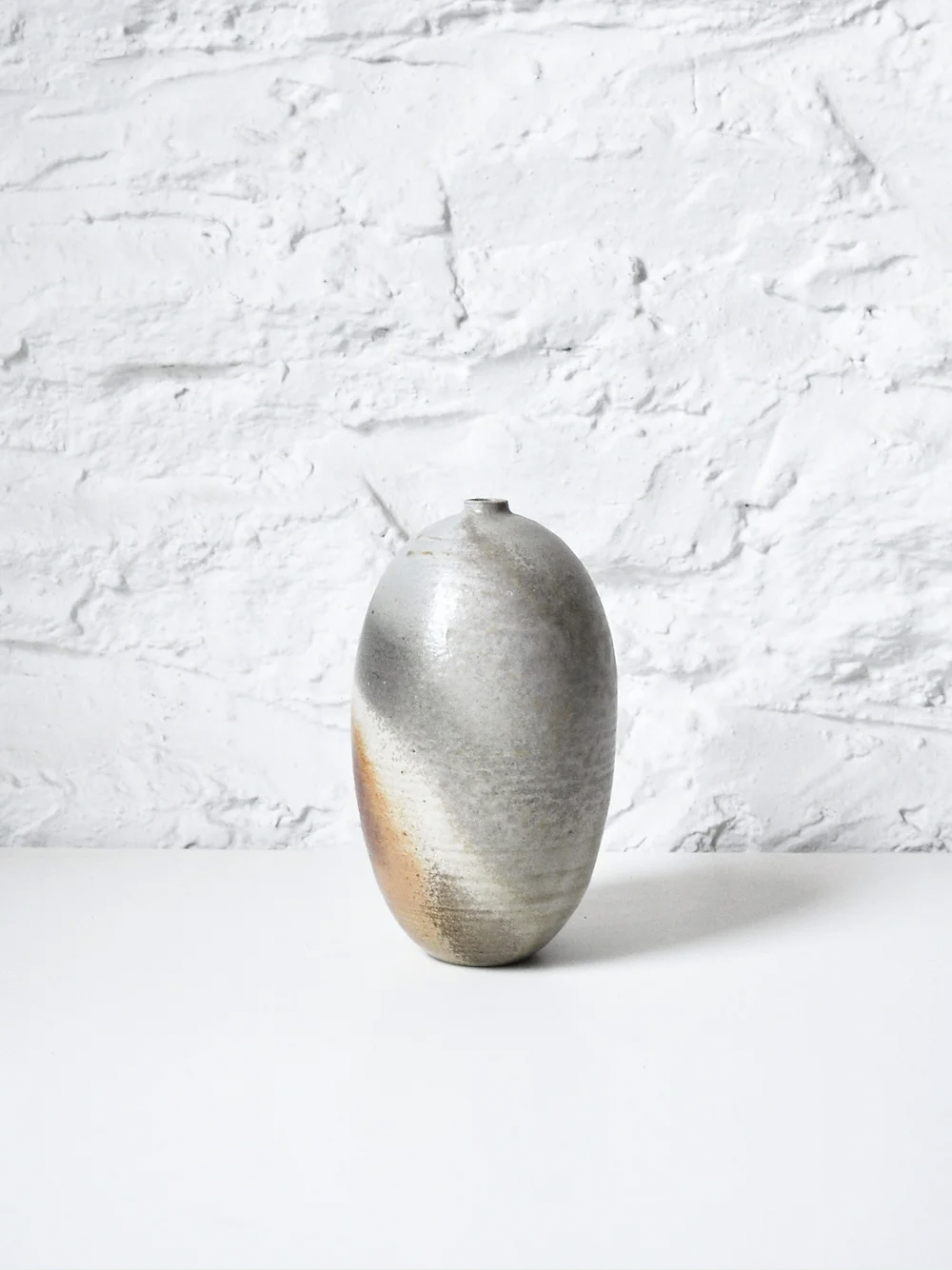

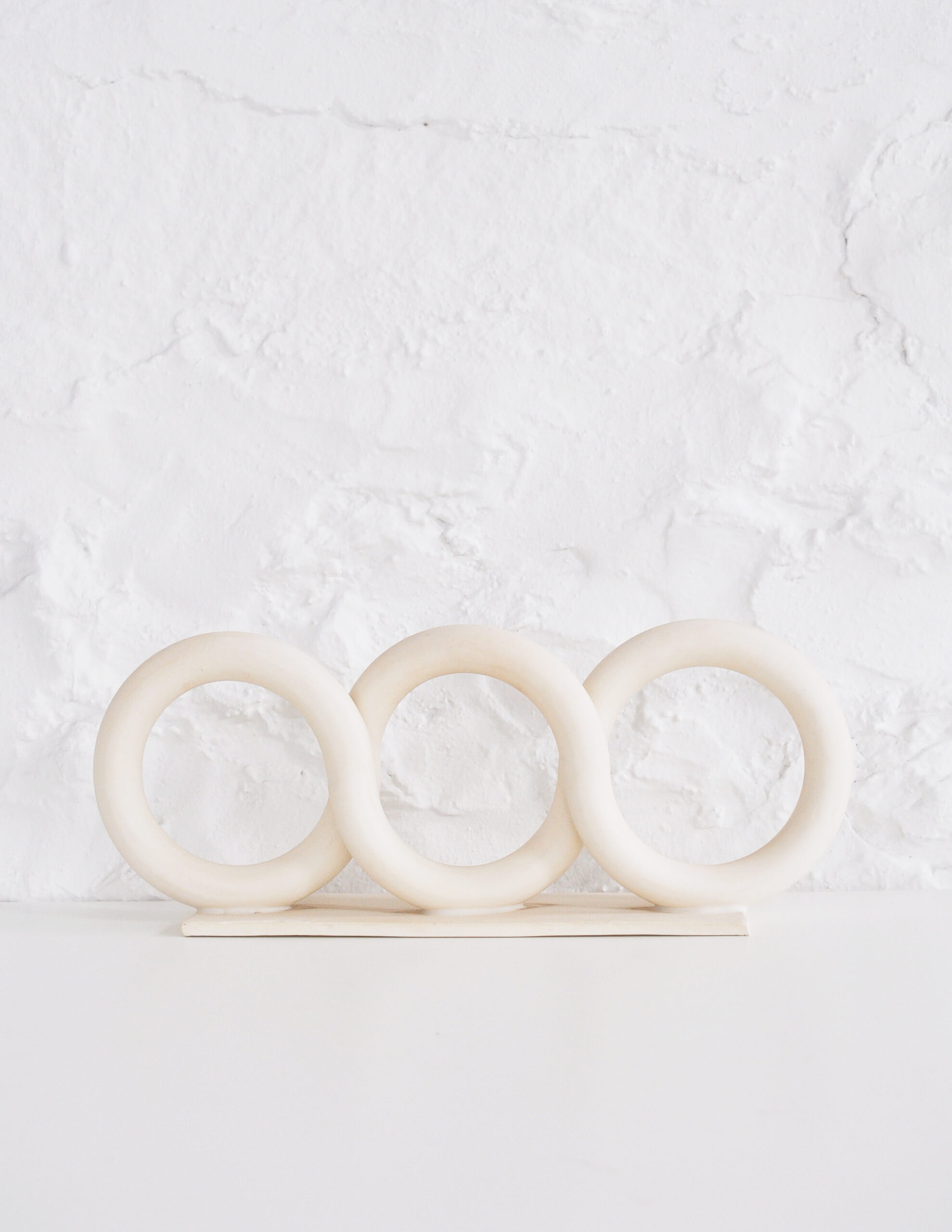
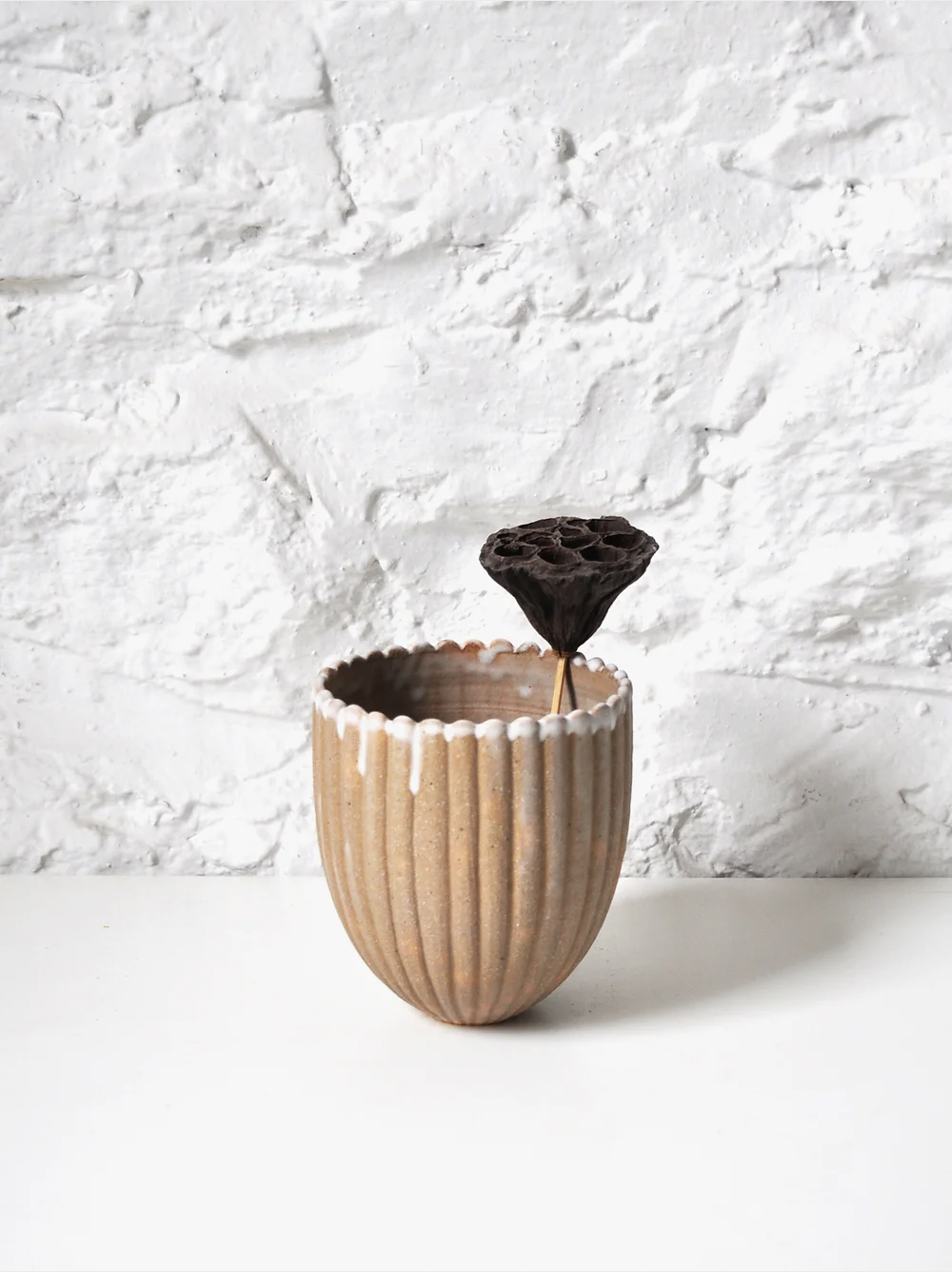
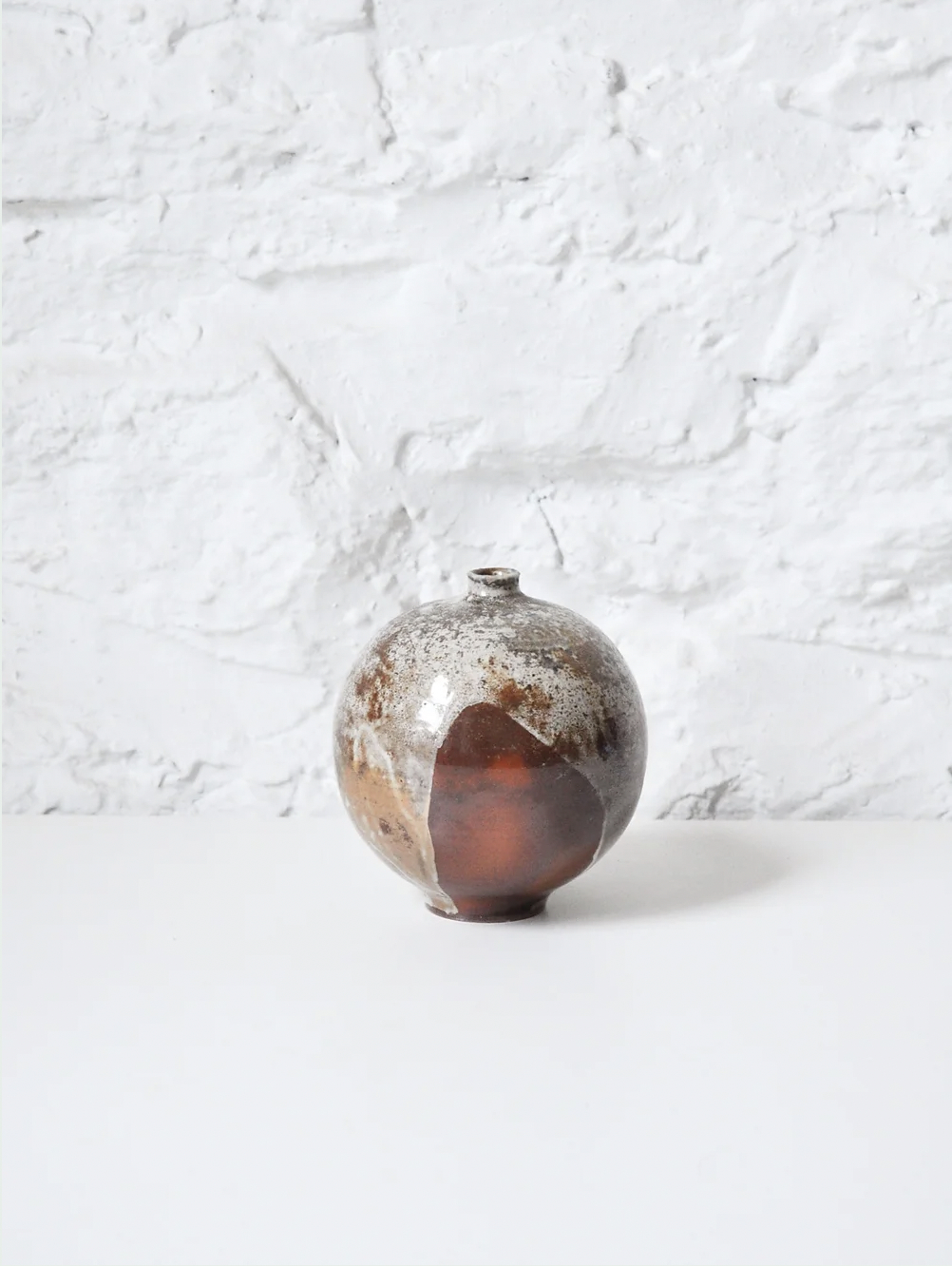
Julianne’s journey from textile design to ceramics exemplifies the beauty of embracing new passions and the unexpected paths they can lead us down. Through Object & Totem, she continues to craft pieces that are both functional and deeply meaningful, inviting us to find the extraordinary in the everyday.
Julianne Ahn
@OBJANDTOTEM
objectandtotem.com