
In Conversation with
GAMALIEL RODRÍGUEZ
Words by Josephine Choe.
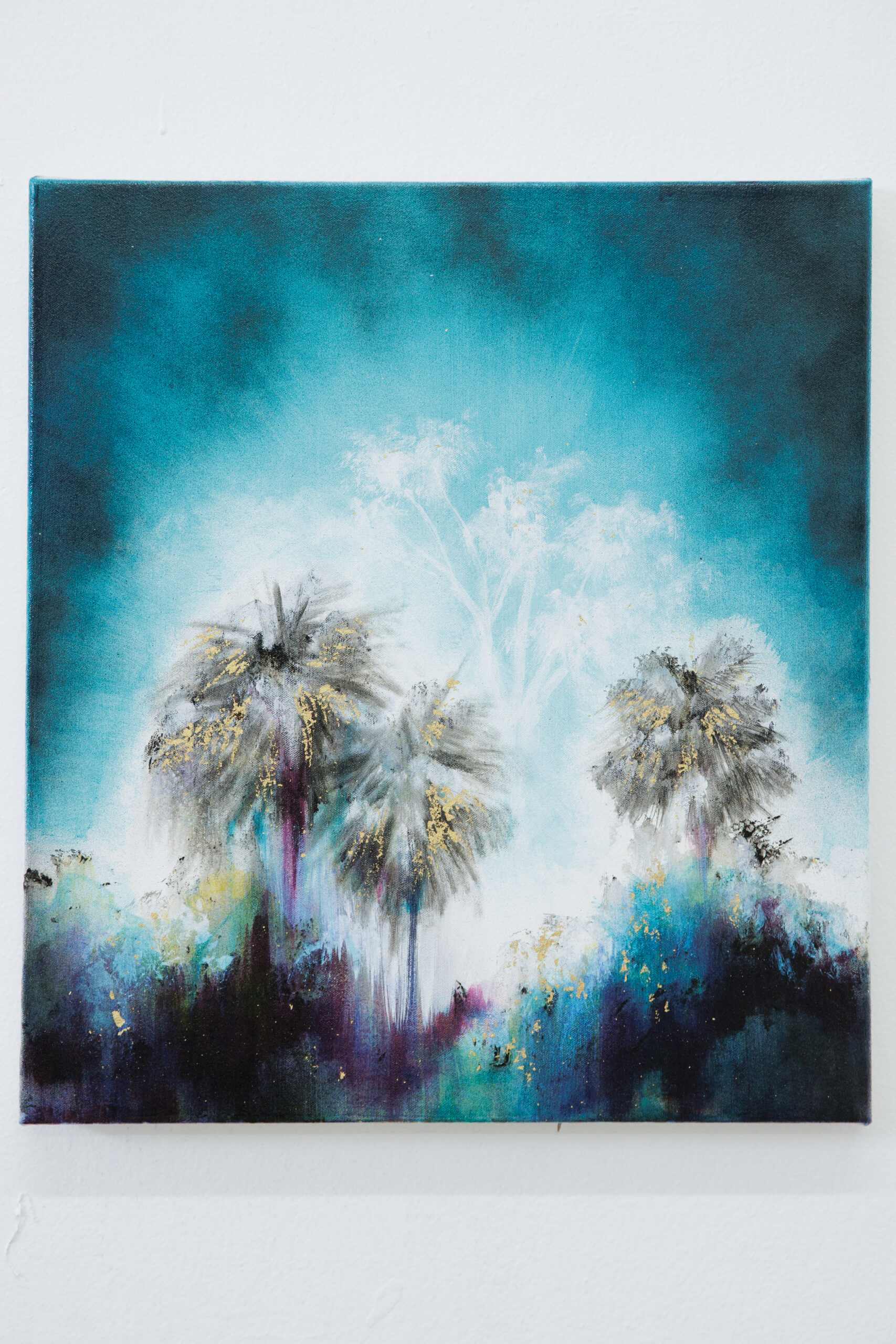
Strolling through the galleries in Chelsea one afternoon, I stumbled across a collection of vivid, almost otherworldly landscapes. Palm trees and tropical scenes unfolded beneath luminous skies, rendered in rich colors. I recognized the artist, Gamaliel Rodríguez, whom I had encountered a few years earlier at an event.
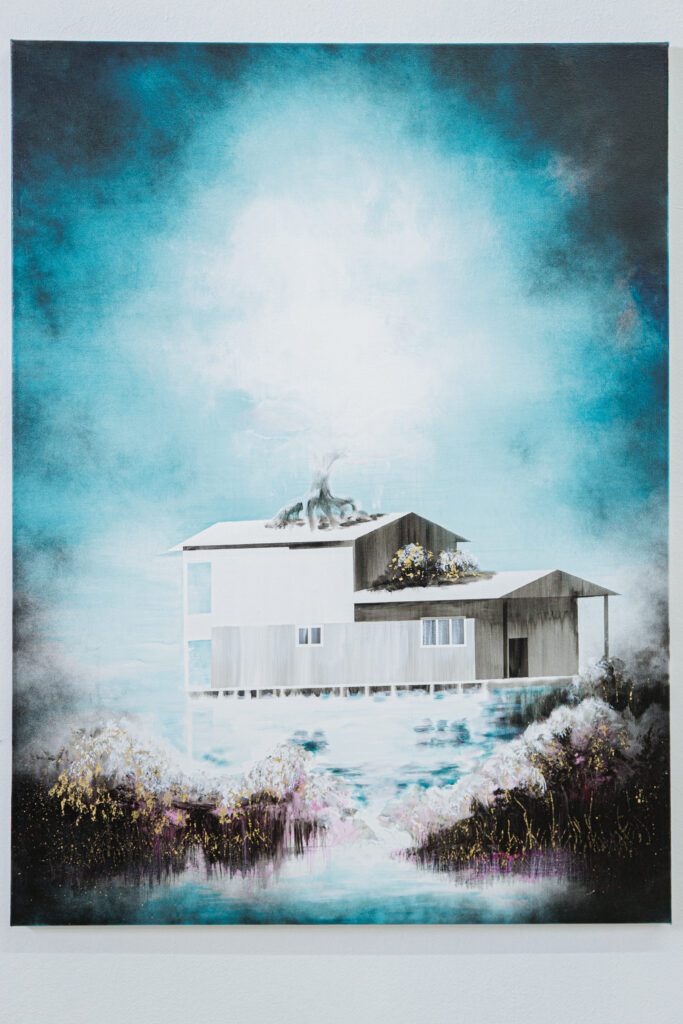
Based in western Puerto Rico, Rodríguez creates paintings, drawings, and prints that explore the relationship between memory and place. His work often depicts industrial structures and forgotten spaces overtaken by nature, existing somewhere between the familiar and the imagined.
Our conversation began with his recent exhibition at Pace Prints, Lo grabado de lo vivido (“What Is Etched from What Has Been Lived”), but soon wandered into his daily routines, upbringing, and the importance of remaining curious.
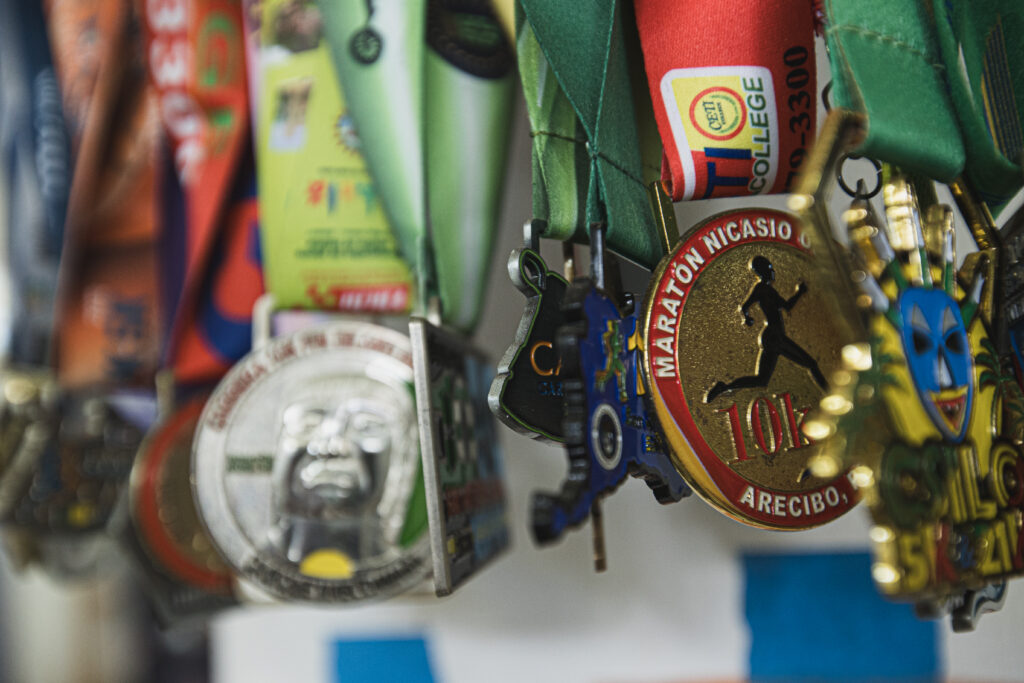
For Rodríguez, inspiration often begins with something as simple as a run.
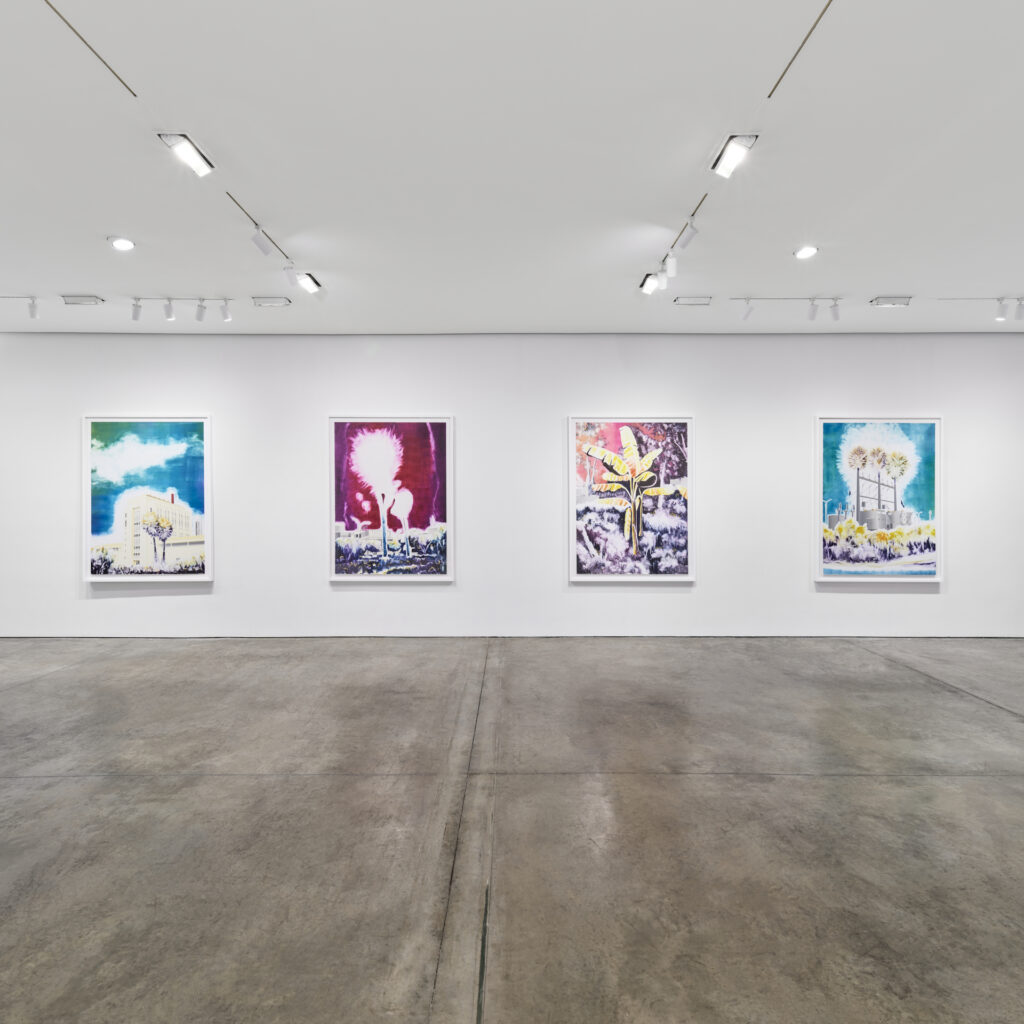
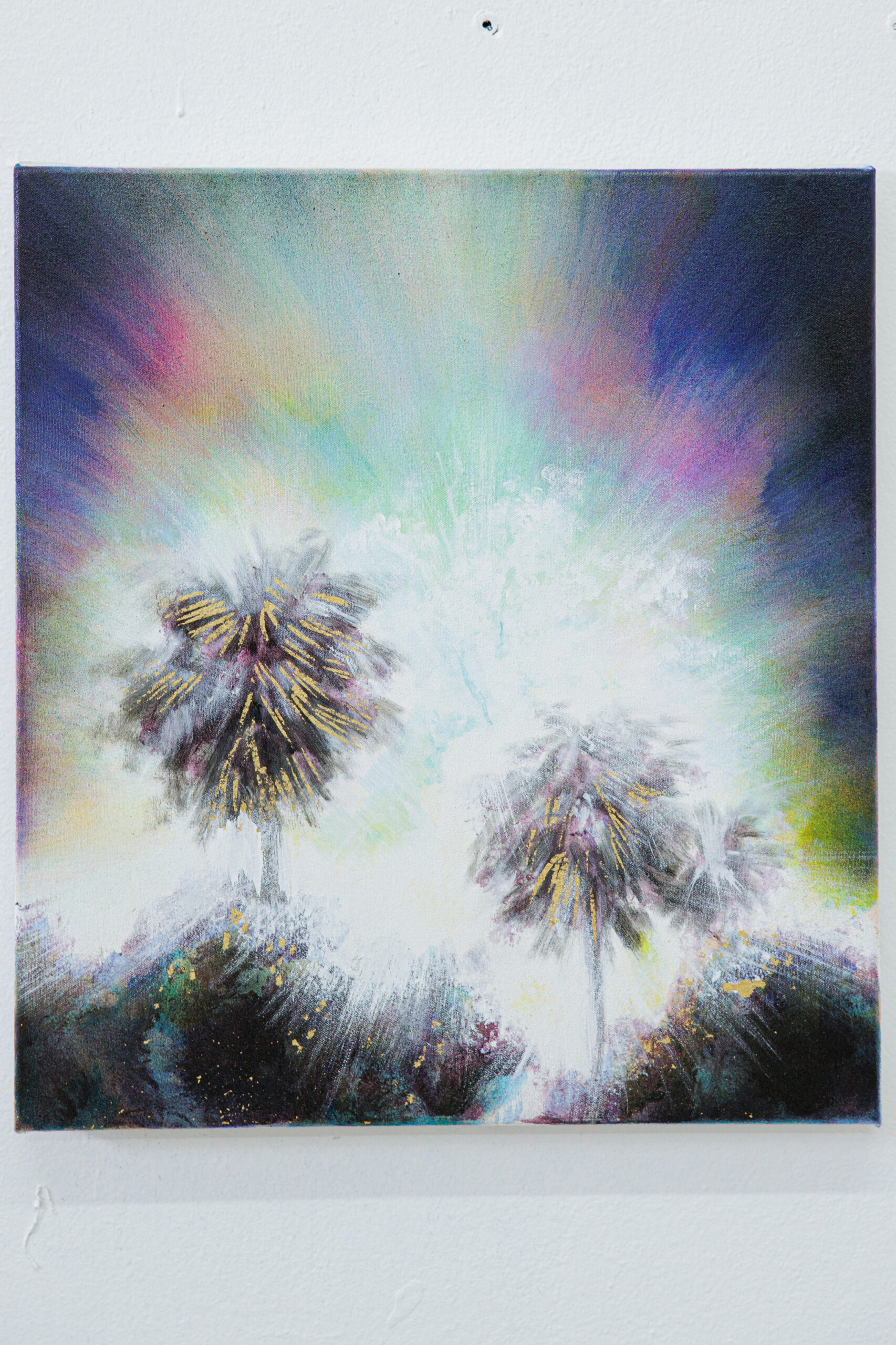
Gamaliel Rodríguez, Lo grabado de lo vivido, Pace Prints, New York, 2026.
Finding Inspiration in Movement
An avid runner for nearly a decade, Rodríguez runs six days a week, sometimes covering more than a dozen miles in a single outing. What began as a physical practice has become an integral part of his creative process.
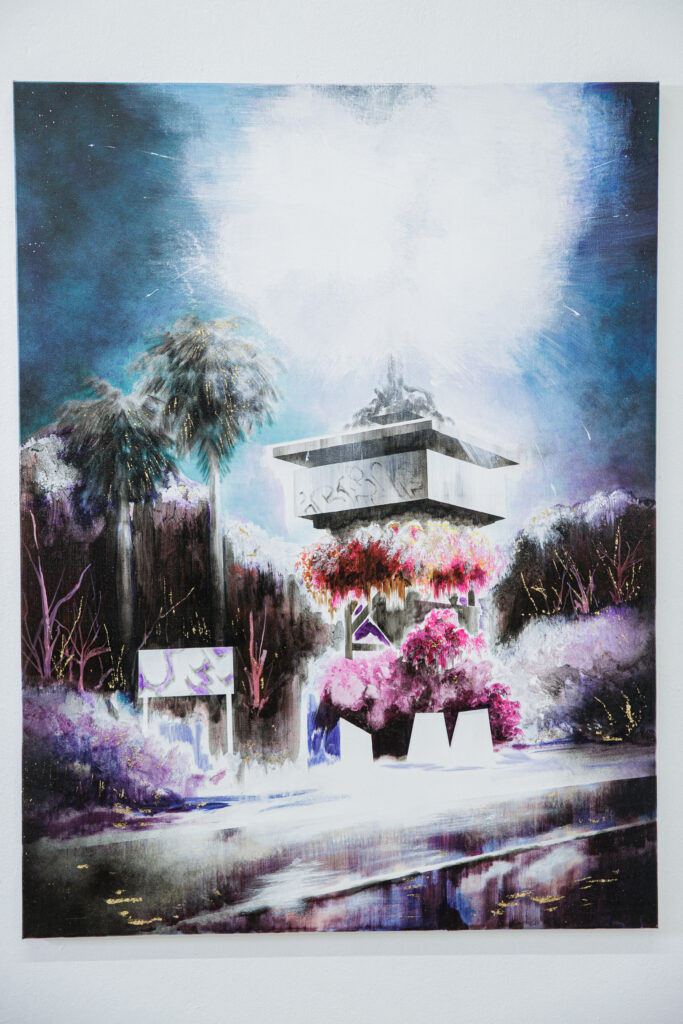
As he runs through Puerto Rico, he encounters places that capture his attention. An abandoned building, a forgotten industrial structure, or a familiar area might evoke a memory or an unexpected connection. He later returns with his camera, documenting the scene before transforming it into something entirely his own.
“I just used the image as a muse,” he explains. “But then I transformed everything.”
These transformations are deeply personal, shaped by his childhood, family, and the layered history of Puerto Rico. The island’s industrial remnants, once symbols of economic development, have become recurring subjects in his work, reflecting broader questions about identity and the passage of time.
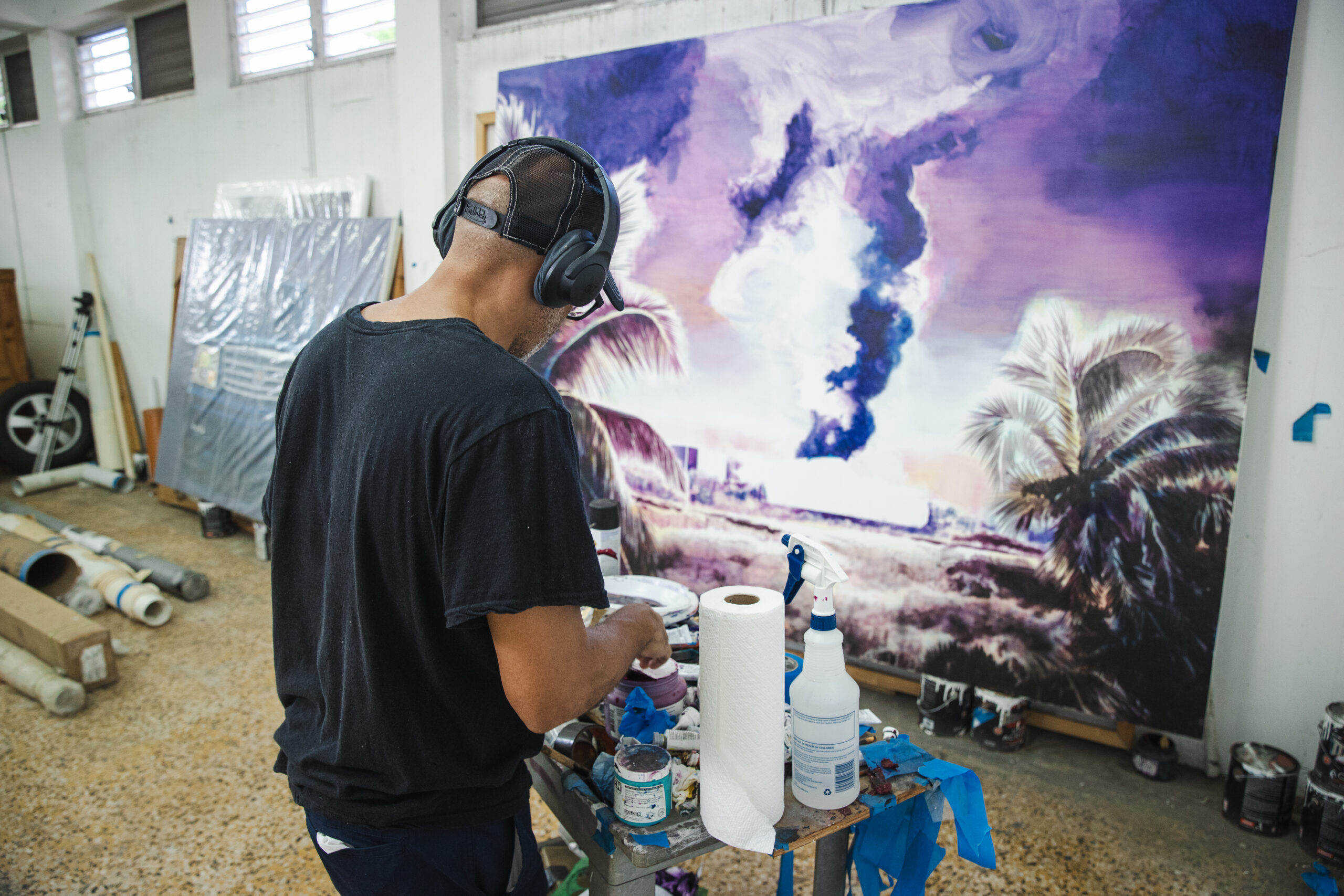
Running also provides an opportunity for reflection. Without music or other distractions, he uses the time to organize his thoughts and contemplate new ideas.
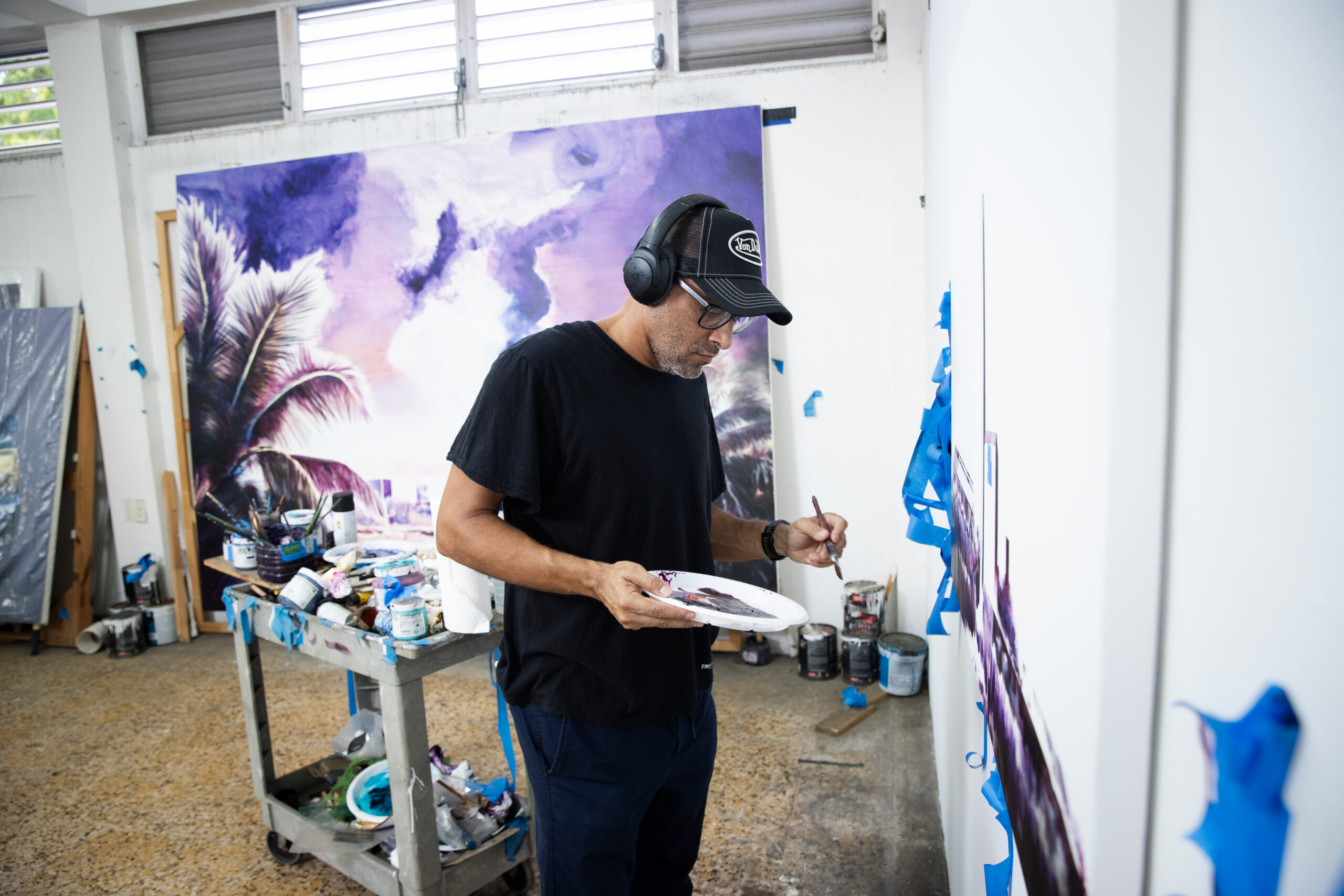
The same discipline carries into his studio practice.
“I have to work every day,” he says. “At least touch something.”
His days often begin in the studio, with a break for an evening run once the tropical heat subsides. Afterward, he returns to work, sometimes continuing into the wee hours of the morning.
An Unexpected Path to Art
Interestingly, Rodríguez did not always imagine himself becoming an artist.
Growing up in Puerto Rico, he was surrounded by relatives who excelled at sports. He remembers being particularly fascinated by a cousin who was skilled at drawing, and began imitating him at a young age.
Although he eventually drifted away from drawing, his interest resurfaced years later. After serving in the National Guard, he found himself uncertain about what to study. A friend who had seen his drawings suggested he study art.
He decided to give it a try.
What followed was an unexpected discovery. Through studying art history, from Puerto Rican and Caribbean traditions to international movements, Rodríguez found himself increasingly captivated by the possibilities of artistic expression.
“I fell in love with art,” he recalls.
He later pursued his MFA in England, where the emphasis shifted from technical instruction to questioning the ideas behind artistic practice. Rather than simply learning how to paint, he was encouraged to consider why he painted, what his chosen materials meant, and how his work might exist within a larger cultural conversation.
Upon returning to Puerto Rico, he began studying the careers of artists he admired, carefully examining their biographies and discovering the importance of artist residencies. Those opportunities eventually helped him build connections beyond the island and establish his own path.
The Beauty of Simplicity
His recent exhibition at Pace Prints marked another important chapter in that journey.
Working with monotype printing presented an entirely new challenge. Unlike his more familiar techniques, the process required him to work directly on a plate using oil-based ink, brushes, and a rag. By removing layers of ink, he allowed the white paper beneath to create areas of extraordinary light.
The resulting prints seemed almost to glow from within.
“I fell in love with that simplicity,” he tells me, reflecting on the process and the unexpected possibilities it revealed.
Not every attempt was successful. Some days produced multiple works, while others yielded nothing at all. Yet he speaks about the experience with infectious enthusiasm, likening it to being a child in a candy store with permission to explore everything.
The experience has already begun to influence his practice, although translating the same effects into other mediums has proved challenging.
As he came to realize, each material has its own language, and part of being an artist is learning to embrace those differences.
The Freedom to Evolve
Throughout our conversation, one idea repeatedly surfaced: the importance of allowing oneself to change.
Rodríguez speaks candidly about the expectations artists face once their work becomes recognizable. There can be immense pressure to continue producing within an established visual language, even as personal interests and creative instincts evolve.
He has little desire to remain confined to one approach.
“I’m not afraid to do something that people don’t like,” he says.
After experimenting with increasingly vibrant colors, he is beginning to feel drawn toward a more restrained palette. He compares this shift to having enjoyed too much ice cream and wanting something simpler and more organic.

Beyond his materials, he hopes to continue exploring the historical and cultural connections between the Caribbean and other parts of the world, particularly Asia and Africa.
He recalls discovering that banana trees, so closely associated with his own surroundings, also evoke childhood memories for collectors in Asia. Something he might have understood as distinctly Caribbean turned out to carry meaning across entirely different cultures.
These shared experiences fascinate him. Despite differences in language and geography, he finds unexpected similarities in how people experience the places they call home.
“I love when you make something that transcends to another place.”
For Rodríguez, remaining open to these discoveries is essential to both his work and his life.
“I love when you make something that transcends to another place.”
Perhaps that is what makes his work so compelling. Though rooted in his own memories of Puerto Rico, his images hold something familiar for those who have never set foot on the island. A banana tree, for instance, might evoke entirely different places and childhoods, yet stir a similar sense of belonging.
His art reminds us that the world is not always as divided as geography might suggest. What feels deeply personal to one person can resonate just as profoundly with someone halfway across the world.

Studio images by Gabriel Martinez. Installation Images Courtesy of Pace Prints.
Gamaliel Rodríguez is a Puerto Rican artist based in Cabo Rojo whose practice spans painting, drawing, and printmaking. His work explores the relationship between memory and place, often depicting tropical environments where nature and industrial structures coexist. He has exhibited at institutions including the Whitney Museum of American Art, MASS MoCA, and the Museo de Arte de Puerto Rico, and was named a 2024 Joan Mitchell Fellow. His recent exhibition, Lo grabado de lo vivido, was presented at Pace Prints in New York.
Gamaliel Rodríguez
@GAMALIEL_ARTIST